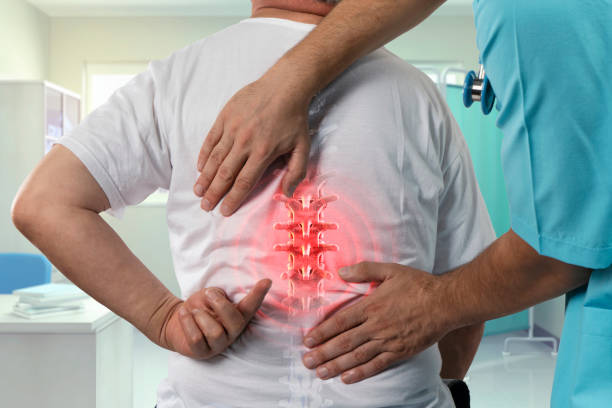
Overview
Spinal cord injuries (SCI) occur when trauma, ischemia, compression, infection, or inflammatory processes damage the spinal cord, resulting in partial or complete disruption of motor, sensory, and autonomic nerve signaling between the brain and the body. SCI can lead to profound and lifelong disability, affecting mobility, sensation, bladder and bowel control, sexual function, cardiovascular regulation, and respiratory capacity.
Spinal cord injuries are broadly classified as traumatic (motor vehicle accidents, falls, sports injuries, violence) or non-traumatic (degenerative disc disease, tumors, vascular compromise, autoimmune or infectious inflammation). Severity ranges from incomplete injuries with preserved neurologic function to complete injuries with total loss of function below the level of damage.
Neuroanatomy & Levels of Injury
The spinal cord is divided into cervical, thoracic, lumbar, sacral, and coccygeal segments. The level of injury determines functional impairment:
- Cervical SCI: Quadriplegia, respiratory compromise
- Thoracic SCI: Paraplegia, trunk instability
- Lumbar/Sacral SCI: Lower limb weakness, bowel/bladder dysfunction
Injury severity is commonly graded using the ASIA Impairment Scale (AIS).

PATHOPHYSIOLOGY OF SPINAL CORD INJURY
SCI evolves through two major phases:
1. Primary Injury
Occurs at the moment of insult and includes:
- Mechanical disruption of neurons and axons
- Vascular injury and hemorrhage
- Immediate cell death
2. Secondary Injury Cascade
Progresses over days to months and is responsible for ongoing neurologic decline:
- Neuroinflammation and immune cell infiltration
- Excitotoxicity from excess glutamate release
- Oxidative stress and mitochondrial dysfunction
- Apoptosis of neurons and oligodendrocytes
- Formation of glial scar tissue inhibiting regeneration
This hostile microenvironment significantly limits the spinal cord’s intrinsic capacity for repair.
Individuals seeking further information may contact us to discuss whether a consultation with a physician would be appropriate
Contact Us
Exosome Therapy
Exosomes are nano-sized extracellular vesicles released by stem cells and other cells. They contain microRNAs, proteins, and signaling molecules that regulate cellular communication.
In SCI research models, exosomes have demonstrated potential to:
- Cross the blood-spinal cord barrier
- Suppress neuroinflammation
- Reduce apoptosis of neurons and oligodendrocytes
- Promote remyelination pathways
- Enhance neuronal survival and plasticity
Because exosomes are acellular, they are being studied for their favorable safety profile and targeted signaling capacity.
Platelet-Rich Plasma (PRP)
PRP is derived from autologous blood and contains a high concentration of platelets and growth factors.
In SCI-adjacent applications, PRP may:
- Support vascular healing
- Reduce local inflammation
- Enhance connective tissue repair around the spine
- Improve rehabilitation outcomes by supporting musculoskeletal health
Platelet-Rich Fibrin (PRF)
PRF is a second-generation platelet concentrate derived from autologous blood that forms a fibrin scaffold capable of releasing growth factors over an extended period of time.
In the context of ALS, PRF is not intended to treat or reverse motor neuron degeneration, but may play a supportive role by:
- Providing sustained release of platelet-derived growth factors (PDGF, TGF-β, VEGF)
- Supporting connective tissue and musculoskeletal integrity as muscle wasting progresses
- Modulating local inflammatory signaling
- Assisting with soft tissue healing related to mobility aids, injections, or procedural interventions
PRF may be used as an adjunctive biologic to support overall tissue health and comfort in patients with advanced neuromuscular disease, particularly when integrated into a comprehensive supportive care plan.
Clinical Goals of Regenerative Support in SCI
While regenerative therapies are not curative, goals may include:
- Preservation of remaining neurologic function
- Reduction of secondary injury progression
- Improved motor or sensory recovery
- Enhanced quality of life
- Optimization of rehabilitation outcomes
Frequently Asked Questions (FAQ)
Can spinal cord injuries be cured?
Currently, there is no definitive cure for SCI. Regenerative medicine focuses on supporting repair mechanisms and improving function rather than complete reversal of injury.
Are stem cells approved for SCI?
Stem cell therapies for SCI are considered investigational and are not FDA-approved for this indication. Ongoing clinical research continues to explore safety and efficacy.
Can exosomes cross into the spinal cord?
Research suggests exosomes may cross the blood-spinal cord barrier and deliver regulatory signals to injured neural tissue.
Is PRP or PRF helpful for paralysis?
PRP and PRF do not regenerate spinal neurons but may support surrounding tissue health, inflammation reduction, and rehabilitation.
Who may be a candidate for regenerative therapies?
Candidacy depends on injury type, severity, chronicity, and overall health. A comprehensive medical evaluation is required.
Are There Any Stem Cell Therapies Approved for the Spine?
No, there are currently no FDA-approved stem cell therapies for spinal conditions. However, numerous clinical trials and research studies are underway exploring the potential role of stem cells in spinal-related research.
How Do People Access Experimental Treatments for Spinal Cord Injuries?
Experimental therapies are typically studied through clinical trials. Some research institutions conduct studies related to spinal cord injuries in different locations, including Long Island, New York, referenced here in a geographic and informational context only. Individuals who participate in a clinical trial may be assigned to different study groups, including control groups.
How Many Types of Experimental Treatment are There?
Experimental treatments for spinal cord injuries are often discussed in several research categories. In general, these approaches may focus on protecting against further damage, repairing nerve tissue, supporting the formation of new nerve pathways, or helping individuals manage the effects of a spinal cord injury (SCI). These categories are part of ongoing scientific investigation.
Could Spinal Cord Injuries Be Curable in the Future?
Some areas of research explore whether experimental approaches could contribute to improved outcomes for spinal cord injuries in the future. At present, these approaches remain investigational, and there is no confirmed cure based on current scientific evidence. Research continues to explore potential possibilities as medical knowledge evolves.
What are Some Ways to Take Care of the Spine?
For general spinal health, healthcare professionals often recommend regular physical activity, adequate hydration, attention to ergonomics, the use of appropriate protective equipment when needed, maintaining a healthy weight, and supporting bone health through proper nutrition. Individuals with a spinal cord injury typically receive care guidance from qualified healthcare professionals based on their specific condition.
Medical & Regulatory Disclaimer
Regenerative therapies including stem cells, exosomes, PRP, and PRF are not FDA-approved treatments for spinal cord injury. These therapies are considered investigational and are offered as part of emerging medical strategies aimed at supporting the body’s natural repair processes. Outcomes vary between individuals, and no guarantee of improvement can be made. Patients should consult with a qualified physician to determine appropriateness and risks.