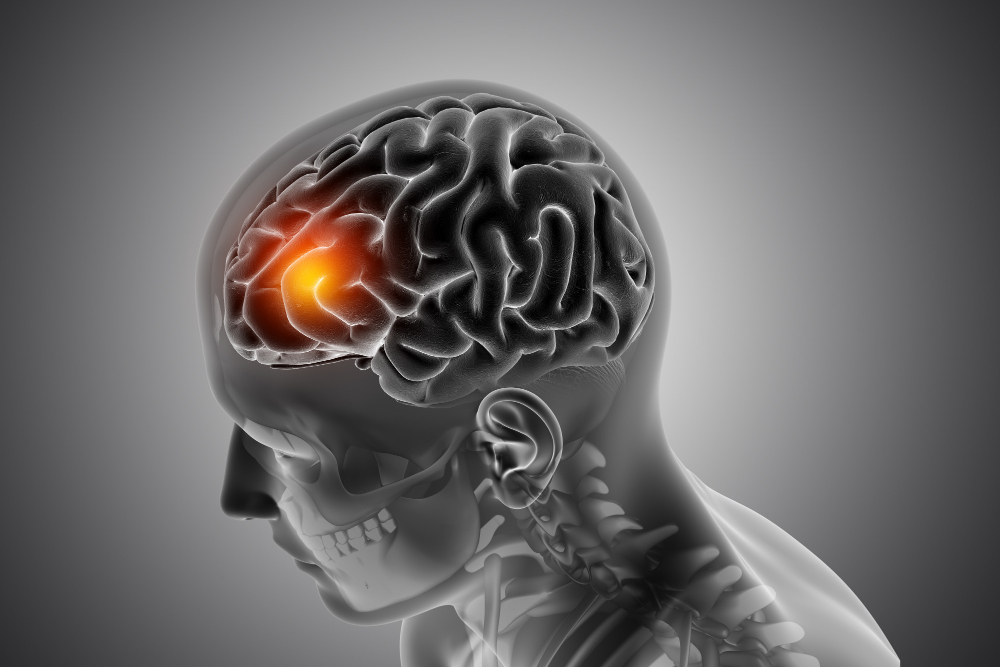
Mechanical Injury, Secondary Neuroinflammation, Axonal Damage, and Impaired Neural Repair
Overview
Traumatic Brain Injury (TBI) is a complex neurological disorder caused by external mechanical forces leading to acute structural damage and prolonged secondary injury cascades within the brain. While the initial trauma occurs at a single point in time, TBI evolves into a chronic neuroinflammatory and neurodegenerative process, often resulting in persistent cognitive, emotional, and physical impairment.
TBI severity exists on a spectrum—from mild concussion to severe penetrating injury—but secondary biological responses, rather than the initial impact alone, largely determine long-term outcomes.
Core Pathophysiology
1. Primary Mechanical Injury
The initial insult results from:
Acceleration–deceleration forces
- Rotational shear stress
- Direct impact or penetration
This causes:
- Contusions
- Hemorrhage
- Diffuse axonal injury (DAI)
- Disruption of neural networks
Primary injury is largely irreversible.
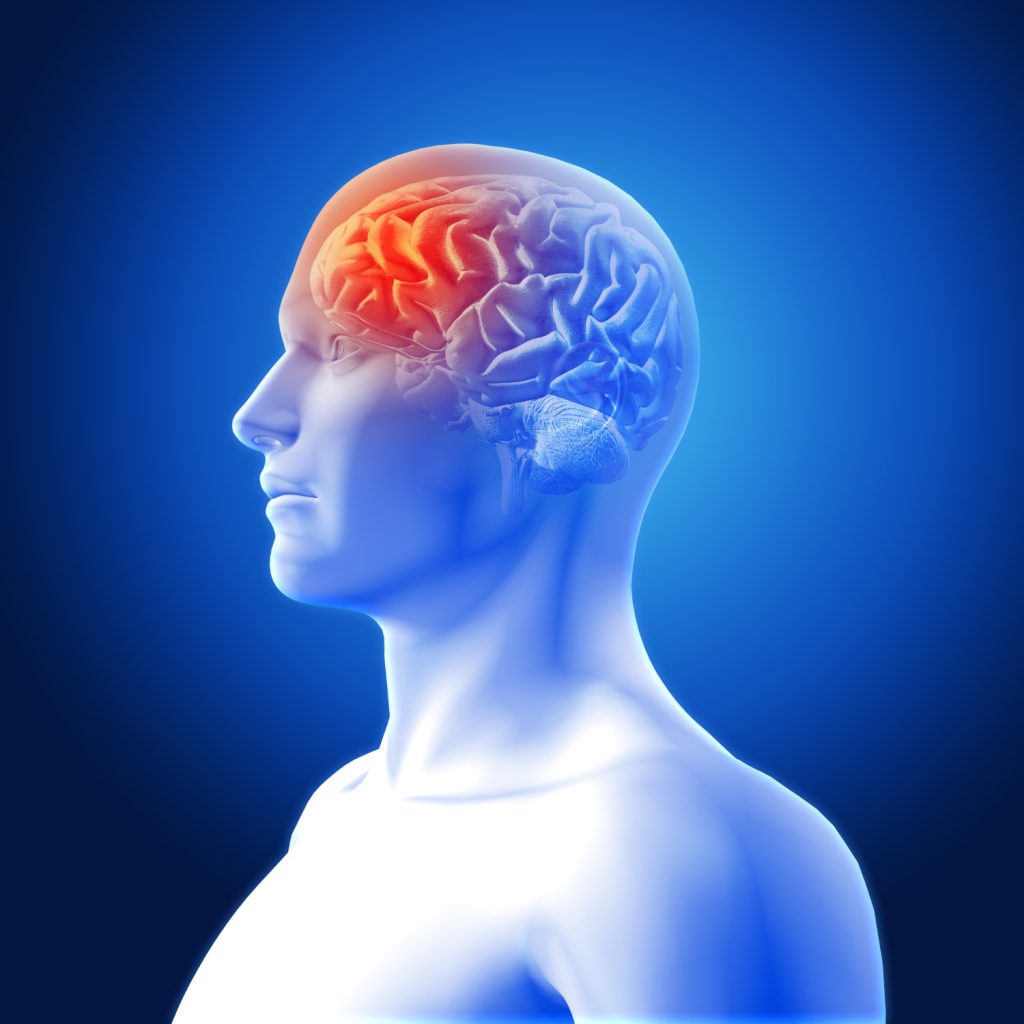
2. Diffuse Axonal Injury & Network Disruption
Axons are particularly vulnerable to shear forces:
- Microtubule disruption
- Impaired axonal transport
- Disconnection of neural circuits
DAI contributes to:
- Loss of consciousness
- Cognitive dysfunction
- Persistent neuropsychiatric symptoms
3. Ionic Imbalance & Excitotoxicity
Mechanical injury triggers:
- Massive glutamate release
- NMDA receptor overactivation
- Calcium influx
- Mitochondrial overload
This excitotoxic cascade extends neuronal injury beyond the initial trauma.
4. Mitochondrial Dysfunction & Energy Crisis
TBI causes:
- Impaired oxidative phosphorylation
- ATP depletion
- Reactive oxygen and nitrogen species generation
Energy failure limits neuronal survival and repair.
5. Blood–Brain Barrier Disruption
TBI compromises BBB integrity:
- Increased permeability
- Cerebral edema
- Infiltration of peripheral immune cells
BBB disruption amplifies neuroinflammation and tissue injury.
6. Neuroinflammation & Immune Activation
Inflammation is central to TBI progression:
- Microglial activation
- Astrocyte reactivity
- Cytokine release (IL-1β, TNF-α, IL-6)
- Complement activation
Acute inflammation may be protective, but chronic neuroinflammation drives ongoing neuronal damage.
7. Secondary Cell Death Pathways
Neuronal loss continues via:
- Apoptosis
- Necroptosis
- Ferroptosis
- Autophagy dysregulation
This explains delayed neurological decline after injury.
8. Impaired Neuroplasticity & Repair
Recovery is limited by:
- Inhibitory inflammatory environment
- Glial scar formation
- Reduced neurogenesis
- Disrupted synaptic remodeling
Functional improvement depends on neural network reorganization, not neuron replacement.
Clinical Manifestations
Symptoms vary by injury severity and location:
Cognitive
- Memory impairment
- Attention deficits
- Executive dysfunction
- Slowed processing speed
Emotional & Behavioral
- Depression
- Anxiety
- Irritability
- Emotional lability
Physical
- Headache
- Dizziness
- Balance problems
- Sleep disturbance
- Sensory sensitivity
Chronic symptoms may persist long after “mild” injuries.
Limitations of Conventional Management
Standard care includes:
- Acute stabilization
- Intracranial pressure management
- Symptom-based pharmacotherapy
- Rehabilitation therapies
These approaches:
- Reduce mortality
- Improve function
They do not:
- Reverse axonal damage
- Halt chronic neuroinflammation
- Restore disrupted neural networks
- Prevent long-term neurodegeneration
Individuals seeking further information may contact us to discuss whether a consultation with a physician would be appropriate
Contact Us
Regenerative & Biologic Therapeutic Concepts
(Investigational / Adjunctive – Not FDA-approved for TBI)
Neuroprotection & Inflammation Modulation (Research-Based)
Research focuses on:
- Limiting secondary injury cascades
- Modulating microglial activation
- Reducing oxidative stress
- Supporting mitochondrial resilience
Timing remains critical.
Neuroplasticity & Network Recovery Support
Investigational approaches aim to:
- Enhance synaptic remodeling
- Support cortical reorganization
- Improve functional connectivity
Rehabilitation drives plasticity but is biologically constrained.
Mesenchymal Stromal Cell & Exosome Science
MSC-derived therapies and exosomes are studied for:
- Immune modulation
- BBB stabilization
- Neurotrophic factor delivery
- Promotion of angiogenesis and plasticity
Observed benefits are paracrine, not structural replacement.
Platelet-Derived Biologics (PRP / PRF – Investigational)
Autologous platelet concentrates may theoretically:
- Support tissue repair signaling
- Modulate inflammation
- Enhance vascular health
Use remains experimental and adjunctive.
Adjunctive Supportive Modalities
Often explored in recovery:
- Photobiomodulation (mitochondrial and neural support)
- Hyperbaric oxygen therapy (oxygenation and angiogenesis)
- Autonomic nervous system regulation
- Metabolic and micronutrient optimization
- Cognitive and physical neurorehabilitation
These aim to support recovery biology, not replace standard care.
Clinical Perspective
TBI is best understood as:
- A chronic neuroinflammatory and neurodegenerative condition
- Initiated by trauma but perpetuated by immune and metabolic dysfunction
- Capable of progressive decline without overt re-injury
Long-term outcomes depend on secondary injury modulation and plasticity support.
Summary
- TBI causes immediate and delayed neuronal injury
- Diffuse axonal injury disrupts brain networks
- Neuroinflammation and mitochondrial dysfunction drive progression
- Conventional care is largely supportive
- Regenerative strategies remain investigational
- Enhancing neuroplasticity is central to recovery