
Overview
Cystic Fibrosis (CF) is a life-shortening, autosomal recessive genetic disorder that affects the lungs, pancreas, gastrointestinal tract, liver, sinuses, and reproductive system. It is caused by mutations in the CFTR (Cystic Fibrosis Transmembrane Conductance Regulator) gene, which encodes a chloride and bicarbonate ion channel essential for maintaining proper fluid balance across epithelial surfaces.
The hallmark of CF is the production of thick, sticky mucus that obstructs airways and ducts, leading to chronic respiratory infections, progressive lung damage, pancreatic insufficiency, malabsorption, and systemic inflammation.
Cystic Fibrosis is a multisystem disease requiring lifelong management. Advances in CFTR-modulating medications have significantly improved outcomes, yet patients may still experience progressive lung dysfunction and systemic complications.
Genetic Basis & Molecular Pathophysiology
CF is caused by mutations in the CFTR gene located on chromosome 7.
Over 2,000 mutations have been identified, though the most common is the ΔF508 mutation.
CFTR protein dysfunction leads to:
- Impaired chloride transport
- Reduced bicarbonate secretion
- Dehydration of airway surface liquid
- Thickened mucus
- Impaired mucociliary clearance
This creates an environment conducive to chronic bacterial colonization and persistent inflammation.
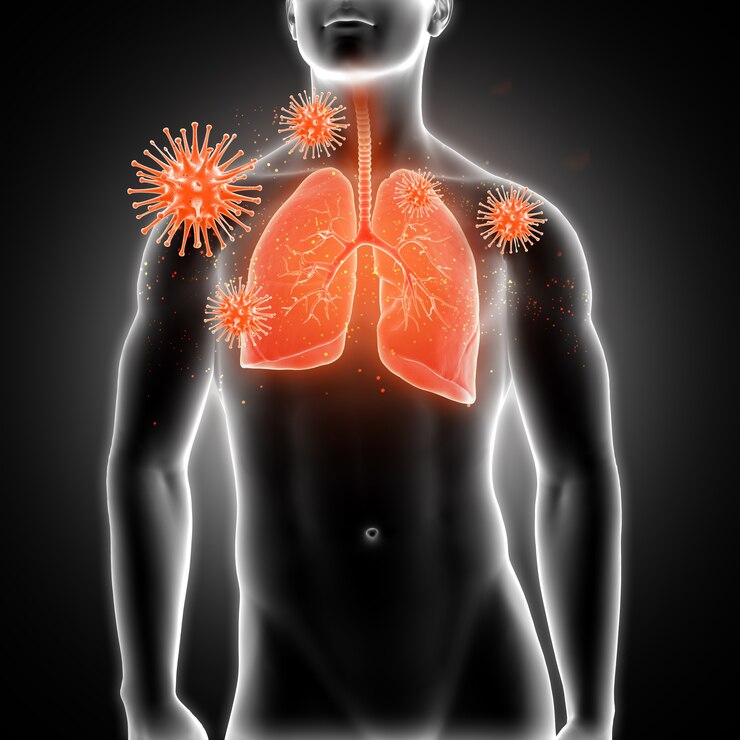
Pulmonary Pathophysiology
The lungs are most severely affected. Key processes include:
1. Airway Obstruction
Thick mucus obstructs bronchi and bronchioles, impairing airflow.
2. Chronic Infection
Common pathogens include:
- Pseudomonas aeruginosa
- Staphylococcus aureus
- Burkholderia cepacia
These infections become chronic due to impaired clearance.
3. Persistent Neutrophilic Inflammation
Excessive immune activation leads to:
- Release of proteases (e.g., neutrophil elastase)
- Tissue destruction
- Bronchiectasis
4. Progressive Structural Damage
Over time:
- Bronchial wall thickening
- Air trapping
- Pulmonary fibrosis
- Respiratory failure
Extrapulmonary Manifestations
Pancreatic Insufficiency
Blocked pancreatic ducts prevent digestive enzyme secretion, leading to:
- Fat malabsorption
- Steatorrhea
- Vitamin deficiencies (A, D, E, K)
- Failure to thrive in children
Liver Disease
Biliary obstruction may cause:
- Focal biliary cirrhosis
- Portal hypertension
Gastrointestinal Complications
- Meconium ileus in newborns
- Distal intestinal obstruction syndrome
- GERD
Reproductive System
- Congenital bilateral absence of the vas deferens in males
- Reduced fertility in females
Conventional Treatment Approaches
Modern CF management includes:
- CFTR modulators (mutation-specific therapy)
- Airway clearance therapy
- Inhaled mucolytics (dornase alfa)
- Bronchodilators
- Inhaled and systemic antibiotics
- Pancreatic enzyme replacement
- Nutritional supplementation
- Lung transplantation in advanced disease
While CFTR modulators have transformed care for many patients, they do not reverse all structural lung damage.
Individuals seeking further information may contact us to discuss whether a consultation with a physician would be appropriate
Contact Us
Regenerative & Biologic Therapies
Stem cells, exosomes, PRP, and PRF are being studied for their potential supportive roles in inflammatory and degenerative lung conditions. These therapies are investigational and are not cures for Cystic Fibrosis.
Stem Cell Therapy
Stem cells are being researched for their immunomodulatory and tissue-supporting properties.
Proposed mechanisms under investigation include:
- Modulation of chronic inflammatory signaling
- Reduction of neutrophil-mediated tissue damage
- Secretion of anti-inflammatory cytokines
- Release of growth factors that may support epithelial repair
- Potential support of alveolar-capillary integrity
Stem cells are not capable of correcting CFTR gene mutations in standard clinical applications. Their proposed benefit relates to modulation of inflammation and support of tissue microenvironment.
Exosome Therapy
Exosomes are extracellular vesicles that carry regulatory proteins, mRNA, and microRNA.
In CF research contexts, exosomes may:
- Modulate excessive inflammatory cascades
- Influence immune cell signaling
- Support epithelial barrier integrity
- Reduce oxidative stress
- Improve mitochondrial energy dynamics in lung tissue
Exosomes are being investigated for their potential ability to influence cellular communication in chronically inflamed lung tissue.
Platelet-Rich Plasma (PRP)
PRP is derived from autologous blood and contains concentrated growth factors such as:
- VEGF
- PDGF
- TGF-β
- IGF-1
In systemic inflammatory conditions, PRP may:
- Support tissue repair signaling
- Modulate inflammatory pathways
- Promote vascular support
- Assist in musculoskeletal complications secondary to chronic illness
PRP is not a treatment for CFTR dysfunction but may serve as a supportive adjunct in comprehensive care strategies.
Platelet-Rich Fibrin (PRF)
PRF provides sustained release of growth factors within a fibrin scaffold.
Potential supportive roles include:
- Prolonged anti-inflammatory signaling
- Support of connective tissue repair
- Enhancement of wound healing
- Adjunctive support in procedures
PRF is not a disease-modifying therapy for Cystic Fibrosis.
Clinical Goals of Supportive Biologic Strategies
When considered in appropriate clinical settings, goals may include:
- Modulation of chronic inflammation
- Support of lung tissue resilience
- Reduction of oxidative stress
- Enhancement of cellular communication
- Complementation of standard CF therapies
Regenerative therapies should be viewed as supportive and investigational.
Frequently Asked Questions (FAQ)
Is Cystic Fibrosis curable?
Currently, there is no cure for CF. However, CFTR modulators have significantly improved outcomes for many patients.
Can stem cells fix the CF gene mutation?
Standard stem cell therapies do not correct CFTR gene mutations. Research into gene-editing technologies is ongoing but remains experimental.
Are regenerative therapies FDA-approved for CF?
Stem cells, exosomes, PRP, and PRF are not FDA-approved treatments for Cystic Fibrosis.
Can these therapies replace CFTR modulators?
No. Regenerative therapies are not substitutes for mutation-specific CFTR therapies or conventional pulmonary management.
Are these therapies safe for pediatric patients?
Pediatric applications require careful specialist evaluation and risk assessment.
Medical & Regulatory Disclaimer
Stem cells, exosomes, PRP, and PRF are not FDA-approved treatments for Cystic Fibrosis. These therapies are considered investigational and are intended to support biologic signaling and inflammatory modulation rather than cure genetic disease. Individual outcomes vary. No guarantees of improvement can be made. All medical decisions should be made in consultation with qualified healthcare professionals.