Overview
Cartilage, ligaments, and other connective tissues play a critical role in maintaining joint stability, flexibility, and structural support throughout the body. These tissues allow joints to move smoothly, help distribute mechanical forces, and connect bones, muscles, and other structures.
Disorders affecting connective tissues can result from injury, degeneration, genetic conditions, chronic inflammation, or overuse. When these tissues become damaged or weakened, individuals may experience pain, joint instability, reduced mobility, and an increased risk of further injury.
Because connective tissues often have limited blood supply, they may heal more slowly than other tissues in the body, which can contribute to chronic symptoms or incomplete healing after injury.
Key Connective Tissues in the Musculoskeletal System
Cartilage
Cartilage is a smooth, flexible tissue that covers the ends of bones within joints. It acts as a cushion and allows bones to glide over each other with minimal friction.
Damage to cartilage can lead to:
- Joint pain
- Stiffness
- Reduced range of motion
- Mechanical symptoms such as grinding or catching
Common cartilage-related conditions include cartilage tears, degenerative cartilage loss, and osteoarthritis.
Ligaments
Ligaments are strong bands of connective tissue that connect bones to other bones. They stabilize joints and control the direction and range of movement.
Ligament injuries are common in sports and trauma and may include:
- Sprains
- Partial ligament tears
- Complete ligament ruptures
Examples include ACL injuries in the knee and ligament sprains in the ankle or wrist.
Tendons
Tendons connect muscles to bones and allow muscles to move joints. Overuse, aging, or repetitive strain can lead to tendon injuries.
Common tendon conditions include:
- Tendinitis
- Tendinosis
- Partial tendon tears
These injuries often occur in areas such as the shoulder, elbow, knee, and Achilles tendon.
Connective Tissue Disorders
Some individuals develop disorders that affect connective tissues throughout the body. These conditions may involve abnormalities in collagen or other structural proteins that provide strength and elasticity to tissues.
Examples include:
- Ehlers-Danlos syndrome
- Hypermobility spectrum disorders
- Degenerative tendon conditions
- Chronic ligament laxity
Symptoms may include joint instability, frequent injuries, chronic pain, and reduced tissue resilience.
Causes of Connective Tissue Damage
Connective tissue injuries or degeneration can occur due to several factors:
- Acute trauma or sports injuries
- Repetitive strain or overuse
- Age-related degeneration
- Chronic inflammation
- Genetic connective tissue disorders
- Poor circulation to healing tissues
Because many connective tissues have limited blood supply, healing can sometimes be slow or incomplete.
Conventional Treatment Approaches
Treatment for connective tissue disorders typically focuses on restoring function, reducing pain, and preventing further injury.
Common treatments include:
Physical Therapy
Strengthening surrounding muscles helps stabilize joints and reduce strain on injured tissues.
Medications
Anti-inflammatory medications may help reduce pain and swelling.
Bracing or Support
External supports may help stabilize joints during recovery.
Surgical Repair
In severe cases, surgery may be necessary to reconstruct torn ligaments or repair damaged cartilage.
Regenerative & Biologic Therapies (Investigational)
Regenerative medicine therapies are being studied for their potential to support healing in connective tissues by influencing cellular repair signals and reducing inflammation.
Stem cells, exosomes, PRP, and PRF are biologic therapies currently being investigated for their potential role in supporting tissue repair in cartilage, ligaments, and tendons.
These therapies are not cures but may help support the body’s natural healing processes.
Stem Cell Therapy (Investigational)
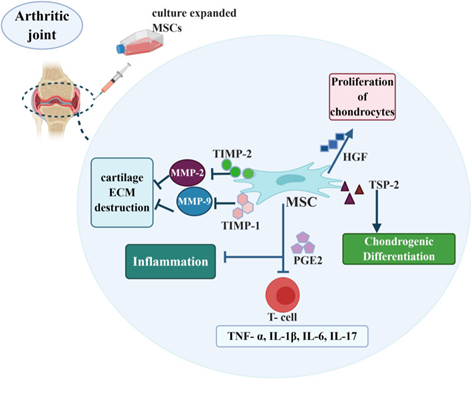
Stem cells are being studied for their potential to support connective tissue repair through the release of signaling molecules that influence healing and inflammation.
Proposed mechanisms include:
- Modulation of inflammatory pathways
- Release of growth factors that support tissue repair
- Stimulation of collagen production
- Support of tendon and ligament healing environments
Rather than directly replacing damaged tissues, stem cells primarily act through cellular signaling that promotes tissue repair.
Individuals seeking further information may contact us to discuss whether a consultation with a physician would be appropriate
Contact Us
Exosome Therapy
Exosomes are microscopic vesicles released by cells that contain important signaling molecules such as microRNA, proteins, and lipids.
In connective tissue research, exosomes are being studied for their potential to:
- Reduce inflammatory signaling
- Support collagen production
- Enhance communication between cells involved in tissue repair
- Support regeneration of damaged connective tissues
Because of their small size, exosomes may be able to penetrate tissues and influence healing responses.
Individuals seeking further information may contact us to discuss whether a consultation with a physician would be appropriate
Contact Us
Platelet-Rich Plasma (PRP)
PRP is derived from a patient’s own blood and contains concentrated platelets that release growth factors involved in tissue repair.
These growth factors may help support:
- Collagen synthesis
- Tendon and ligament healing
- Reduction of inflammation
- Improved tissue repair signaling
PRP has become widely used in sports medicine for treating tendon and ligament injuries.
Individuals seeking further information may contact us to discuss whether a consultation with a physician would be appropriate
Contact Us
Platelet-Rich Fibrin (PRF)
PRF is a second-generation platelet concentrate that forms a fibrin matrix capable of slowly releasing growth factors over time.
Potential supportive benefits include:
- Sustained release of healing cytokines
- Improved tissue repair environment
- Enhanced connective tissue healing
- Support for ligament and tendon repair processes
PRF is often used as an adjunctive therapy in regenerative treatments.
Individuals seeking further information may contact us to discuss whether a consultation with a physician would be appropriate
Contact Us
Goals of Regenerative Therapies
When used in investigational settings, regenerative therapies aim to support:
- Tissue repair signaling
- Reduction of inflammation
- Collagen production and connective tissue strength
- Improved joint stability and mobility
- Enhanced healing in slow-repair tissues
These therapies are typically used alongside physical therapy and other conventional treatments.
Frequently Asked Questions
Why do ligament and tendon injuries take so long to heal?
Ligaments and tendons have relatively limited blood supply compared to muscles, which slows the delivery of nutrients and healing cells needed for tissue repair.
Can cartilage grow back after injury?
Cartilage has limited regenerative ability. While small defects may repair to some degree, large cartilage injuries often require supportive treatments or surgical intervention.
Is PRP commonly used for ligament or tendon injuries?
Yes. PRP has become widely used in orthopedic and sports medicine settings to support healing in ligaments, tendons, and other connective tissues.
Are regenerative therapies a replacement for surgery?
In some cases they may help support healing and improve symptoms, but severe structural injuries may still require surgical repair.